jueves, 8 de mayo de 2014

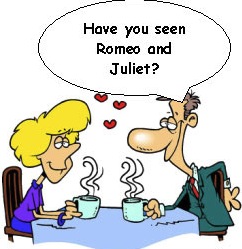
Present Perfect

FORM

[has/have + past participle]
Examples:
  • You have seen that movie many times.
  • Have you seen that movie many times?
  • You have not seen that movie many times.

USE 1 Unspecified Time Before Now


We use the Present Perfect to say that an action happened at an unspecified time before now. The exact time is not important. You CANNOT use the Present Perfect with specific time expressions such as: yesterday, one year ago, last week, when I was a child, when I lived in Japan, at that moment, that day, one day, etc. We CAN use the Present Perfect with unspecific expressions such as: ever, never, once, many times, several times, before, so far, already, yet, etc.

Examples:
  • I have seen that movie twenty times.
  • I think I have met him once before.
  • There have been many earthquakes in California.
  • People have traveled to the Moon.
  • People have not traveled to Mars.
  • Have you read the book yet?
  • Nobody has ever climbed that mountain.
  • A: Has there ever been a war in the United States?
    B: Yes, there has been a war in the United States.

How Do You Actually Use the Present Perfect?

The concept of "unspecified time" can be very confusing to English learners. It is best to associate Present Perfect with the following topics:

TOPIC 1 Experience

You can use the Present Perfect to describe your experience. It is like saying, "I have the experience of..." You can also use this tense to say that you have never had a certain experience. The Present Perfect is NOT used to describe a specific event.
Examples:
  • I have been to France.
    This sentence means that you have had the experience of being in France. Maybe you have been there once, or several times.
  • I have been to France three times.
    You can add the number of times at the end of the sentence.
  • I have never been to France.
    This sentence means that you have not had the experience of going to France.
  • I think I have seen that movie before.
  • He has never traveled by train.
  • Joan has studied two foreign languages.
  • A: Have you ever met him?
    B: No, I have not met him.

TOPIC 2 Change Over Time

We often use the Present Perfect to talk about change that has happened over a period of time.
Examples:
  • You have grown since the last time I saw you.
  • The government has become more interested in arts education.
  • Japanese has become one of the most popular courses at the university since the Asian studies program was established.
  • My English has really improved since I moved to Australia.

TOPIC 3 Accomplishments

We often use the Present Perfect to list the accomplishments of individuals and humanity. You cannot mention a specific time.
Examples:
  • Man has walked on the Moon.
  • Our son has learned how to read.
  • Doctors have cured many deadly diseases.
  • Scientists have split the atom.

TOPIC 4 An Uncompleted Action You Are Expecting

We often use the Present Perfect to say that an action which we expected has not happened. Using the Present Perfect suggests that we are still waiting for the action to happen.
Examples:
  • James has not finished his homework yet.
  • Susan hasn't mastered Japanese, but she can communicate.
  • Bill has still not arrived.
  • The rain hasn't stopped.

TOPIC 5 Multiple Actions at Different Times

We also use the Present Perfect to talk about several different actions which have occurred in the past at different times. Present Perfect suggests the process is not complete and more actions are possible.
Examples:
  • The army has attacked that city five times.
  • I have had four quizzes and five tests so far this semester.
  • We have had many major problems while working on this project.
  • She has talked to several specialists about her problem, but nobody knows why she is sick.


text...
My boyfriend, John, and I have been together for about six months. My 16th birthday was coming up and I was so excited because my previous birthdays had been bad. Of course I was crushed when he told me his family was going away to Florida that weekend! While he was gone, my sister took me to the mall to get my mind off it. The whole time I kept texting him how much I missed him. I really started to get bummed out and we had shopped all day, so she decided to take me home. On the way, my sister said she wanted to stop at her boyfriend's house to say hi. When we walked in my friends all screamed, 'Surprise!' I was happy about the party but still upset because John wasn't there. Then my sister told me to go to the closet to get my presents. I walked over and opened the door, and there stood John with a big red ribbon on his shirt! It turns out he had planned the whole party just so I could finally have an amazing birthday. I couldn't have asked for a better day, or a better boyfriend!"

miércoles, 5 de marzo de 2014

3 conditional
We can use the Third Conditional to talk about 'impossible' conditions, impossible because they are in the past and we cannot change what has happened.
  • If I had worked harder at school, I would have got better grades.
  • If I had had time, I would have gone to see him. But I didn't have time.
  • If we had bought that house, we would have had to rebuild the kitchen.
  • If we had caught the earlier train, we would have got there on time but we were late.
Notice that the main clause can contain 'would', 'could' or 'might.
  • If I had seen him at the meeting, I would have asked him. (But he wasn't there so I didn't.)
  • If I had seen him at the meeting, I could have asked him. ( But he wasn't there so it wasn't possible.)
  • If I had seen him at the meeting, I might have asked him. (But I'm not sure. Perhaps if the opportunity had arisen.)
  • If I had paid more attention in class, I would have understood the lesson.
Also notice that sometimes the 'if clause' is implied rather than spoken.
  • I'd have done it. ("if you had asked me but you didn't.")
  • I wouldn't have said that. ("if I'd been there.")
  • He wouldn't have let him get away with that. ("if he had tried that with me.")


IFconditionresult
past perfectWOULD HAVE + past participle
IfI had seen MaryI would have told her.
IfTara had been free yesterdayI would have invited her.
Ifthey had not passed their examtheir teacher would have been sad.
Ifit had rained yesterdaywould you have stayed at home?
Ifit had rained yesterdaywhat would you have done?

resultIFcondition
WOULD HAVE + past participlepast perfect
I would have told MaryifI had seen her.
I would have invited Taraifshe had been free yesterday.
Their teacher would have been sadifthey had not passed their exam.
Would you have stayed at homeifit had rained yesterday?
What would you have doneifit had rained yesterday?


2nd conditional

The Second Conditional is used to talk about 'impossible' situations.
  • If we were in London today, we would be able to go to the concert in Hyde Park.
  • If I had millions dollars, I'd give a lot to charity.
  • If there were no hungry people in this world, it would be a much better place.
  • If everyone had clean water to drink, there would be a lot less disease.
Note that after I / he/ she /it we often use the subjunctive form 'were' and not 'was'. (Some people think that 'were' is the only 'correct' form but other people think 'was' is equally 'correct' .)
  • If she were happy in her job, she wouldn't be looking for another one.
  • If I lived in Japan, I'd have sushi every day.
  • If they were to enter our market, we'd have big problems.
Note the form 'If I were you' which is often used to give advice.
  • If I were you, I'd look for a new place to live.
  • If I were you, I'd go back to school and get more qualifications.
The Second Conditional is also used to talk about 'unlikely' situations.
  • If I went to China, I'd visit the Great Wall.
  • If I was the President, I'd reduce taxes.
  • If you were in my position, you'd understand.
Note that the choice between the first and the second conditional is often a question of the speaker's attitude rather than of facts. Compare these examples. Otto thinks these things are possible, Peter doesn't.
  • Otto – If I win the lottery, I'll buy a big house.
  • Peter – If I won the lottery, I'd buy a big house.
  • Otto – If I get promoted, I'll throw a big party.
  • Peter – If I got promoted, I'd throw a big party.
  • Otto – If my team win the Cup, I'll buy champagne for everybody.
  • Peter – If my team won the Cup, I'd buy champagne for everybody.
Note that the 'If clause' can contain the past simple or the past continuous.
  • If I was still working in Brighton, I would commute by train.
  • If she were coming, she would be here by now.
  • If they were thinking of selling, I would want to buy.
Note that the main clause can contain 'would' 'could' or 'might.
  • If I had the chance to do it again, I would do it differently.
  • If we met up for lunch, we could go to that new restaurant.
  • If I spoke to him directly, I might be able to persuade him.
Also note that sometimes the 'if clause' is implied rather than spoken.
  • What would I do without you? ("if you weren't here")
  • Where would I get one at this time of night? ("if I wanted one")
  • He wouldn't agree. ("if I asked him")

1 conditional


If clauseMain clause
If + Present tensewill / can / may / must + verb
If it rains today,I'll stay at home
  • If it rains today, I'll stay at home.
    Si llueve hoy, me quedaré en casa.
  • If he is busy now, I will come back tomorrow.
    Si está ocupado ahora, regresaré mañana.
  • If I have time, I'll visit my parents this afternoon.
    Si tengo tiempo, visitaré a mis padres esta tarde.
  • If it is warm tomorrow, we'll go to the beach.
    Si está caluroso mañana, iremos a la playa.
  • If it is cold, you must wear warm clothes.
    Si está frío, debes usar ropa abrigada.
  • If he doesn't do his homework, he can not go to the party.
    Si él no hace su tarea, no puede ir a la fiesta.
  • If she doesn't call you, you can call her.
    Si ella no te llama, tú puedes llamarla.
  • If you work hard, you may become a millonaire someday.
    Si trabajas duro, puede que te conviertas en un millonario algún día.
  • If you spend more than you earn, you'll become a poor man.
    Si gastas más de lo que ganas, te convertirás en un hombre pobre.
  • If they don't invite you, you must not go.
    Si ellos no te invitan, no debes ir.
  • If we don't hurry, we'll miss our bus.
    Si no nos apuramos, perderemos nuestro autobus.
  • If you pay now, you'll get a discount.
    Si pagas ahora, obtendrás un descuento.
  • If they don't want to go out, they can stay home.
    Si no quieren salir, se pueden quedar en casa.
  • If you drink too much, you'll get drunk.
    Si bebes demasiado, te emborracharás.
  • If you feel sick, you must stay in bed.
    Si te sientes enfermo, debes quedarte en cama.
  • If they don't come here, we'll have to go there.
    Si ellos no vienen aquí, tendremos que ir allí.


Note! We never use will, or won't in the if part of the sentence.
For example:
  • If I have time today, I will phone my friend. = I will phone my friend if I have time today. (It is possible that I will have time - therefore the condition is real).
  • If I go to England, I will buy some Cheddar cheese. = I will buy some Cheddar cheese if I go to England. (It is possible that I will go to England - therefore the condition is real).


0 conditional

If clauseMain clause
If + Present tensePresent tense
If you freeze waterit turns into ice.


  • If you freeze water, it turns into ice.
    Si congelas el agua, se convierte en hielo.
  • If I work too much, I get tired. 
    Si trabajo demasiado, me canso.
  • If I have time, I usually go to the movies.
    Si tengo tiempo, generalmente voy al cine.
  • If she eats hamburgers, she gets an allergy.
    Si ella come hamburguesas, le da alergia.
  • If they come here, they always bring a present.
    Si ellos vienen aquí, siempre traen un regalo.
  • If she doesn't know the answer, she keeps silent.
    Si ella no sabe la respuesta, se mantiene en silencio.
  • If we don't go out on Saturdays, we rent a video and stay home.
    Si no salimos los sábados, alquilamos un video y nos quedamos en casa.

IFconditionresult
present simplepresent simple
IfI miss the 8 o'clock busI am late for work.
IfI am late for workmy boss gets angry.
Ifpeople don't eatthey get hungry.
Ifyou heat icedoes it melt?


miércoles, 11 de diciembre de 2013

when and while...

Question: How do I choose between when and while?

Grammar: Adverbs (time expressions)

When is used for shorter actions, and while is used for longer actions.

When is usually used with simple tenses, and while with progressive tenses.

For example, let’s look at two actions, one short and one long:
Short action – Fall down (it only takes a second to fall down)Long action – Ride a bike (bike rides can last a long time)Because one is long and one is short, these two actions can’t happen at the same time. The short action interrupts the long action:

I was riding my bike when I fell down.I fell down while I was riding my bike.Let’s consider two more actions:

Reading a bookTelephone ringingIt is clear that the telephone ringing is the shorter action, it only takes a few seconds:

I was reading a book when the telephone rang.The telephone rang while I was reading a book

 while we use when we speak of two events at the same time is nesesario utiizar time spent or progressive actions of one of the other can go on past simple


Both are adverbs, and both are used to talk about a 'background' event or situation that happens at the same time as something else. Here are a couple of examples:

It was raining when I arrived.

I usually eat my dinner while he tells me about his day.

If both the 'background' event and the 'main' event are long we usually use while:

I read my book while she slept.

But if both if the events are short we can only use when:

He smiled when he arrived.

Also, if we are talking about periods of life we only use when:

When I was a child I played with dolls a lot.

martes, 10 de diciembre de 2013

Some friends are coming to dinner. (Unos amigos van a venir a cenar)
Some old friends called me yesterday. (Unos viejos amigos me llamaron ayer)
Some people will never learn anything. (Algunas personas nunca aprenderán nada)
Are you doing anything tomorrow night? (¿Vas a hacer algo mañana a la noche?)


Could we have some bread, please?
 (¿Podría traernos algo de pan, por favor?)
Would you like something to drink?
 (¿Desea algo de beber?)


Take a card. Any card. (Toma un naipe. Cualquier naipe)

Can I take any book with me? (Puedo llevarme cualquier libro?)


I'm really hungry. I'll eat anything. (Tengo mucho apetito. Comeré cualquier cosa)